
Is Nationalism Compatible with Economic Sovereignty
Reflections on KK Day – Tuesday 28 April 2026
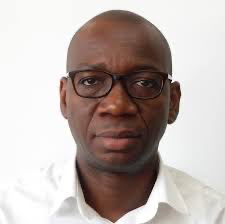
By Savior Mwambwa
Today, Tuesday, 28th April, is Kenneth Kaunda (KK) Day. KK Day is a Zambian holiday in form, but in substance, it belongs to all of Africa and to the wider Global South. Kenneth Kaunda was a founding architect of the Frontline States, a steadfast ally of Southern Africa’s liberation movements, a voice of non‑alignment when the world was being forced into bipolar camps, and a moral conscience for a continent still negotiating the terms of its independence. To remember him is to remember that Zambia’s freedom was always understood as part of a larger project: African dignity and Global South solidarity in a world economy not built with us in mind.
On the day we mark Kenneth Kaunda’s life, I am reminded via a passage by KK from “A Humanist in Africa” that has only grown sharper with time, that a friend posted on one of our chat groups;
“Whatever combination of factors has influenced the development of African nationalism, the important question is this: what happens to nationalism as a movement of protest when the basic target of its protest — the colonial power — has been removed? … Unless new, exciting and worthwhile goals can be proposed for nationalism, there is a danger of the movement of protest turning inwards upon itself and becoming destructive of the national good.”
KK wrote those words in 1966, barely two years into Zambia’s independence. He was already anticipating the crisis that would consume much of post‑colonial Africa: liberation movements organised around an enemy lose their organising principle when the enemy departs. The discipline of the freedom struggle curdles, in too many places, into the discipline of the security state. The protest energy turns inward.
The question has not gone away. If anything, this geopolitical moment forces us to ask it again, with new content: what worthwhile goal can renew African nationalism today, and is that goal compatible with the kind of cooperation our circumstances demand?
I want to argue that the answer is economic and fiscal sovereignty — and that, properly understood, this answer requires us to do something nationalism has historically resisted: pool authority across borders.
The unfinished business
Thandika Mkandawire spent his career insisting that decolonisation was unfinished business. While political flags were raised, fiscal institutions and norms were not redesigned. African states inherited tax systems built for extraction, central banks tethered to external anchors, debt instruments denominated in currencies they did not issue, and an international financial architecture that punished the very counter‑cyclical spending developmental states require.
Six decades on, the unfinished business is more visible than ever. International financial institutions still carry an institutional bias against industrial policy, even as the economies that once lectured us rediscover it under names like the Carbon Border Adjustment Mechanism (CBAM), Inflation Reduction Act (IRA) and CHIPS. The sovereign debt architecture treats a Zambian or Ghanaian default as a years‑long negotiation, while the same maths in advanced economies is met with quantitative easing. Tax treaties bleed revenue from the resource‑rich to the capital‑rich. Credit rating oligopolies impose downgrades that cost African sovereigns more annually than many of them spend on health. Mineral supply chains are being remapped by great‑power competition, with African producers not at the table where the rules are written.
This is the terrain on which a renewed nationalism has something concrete to push against. It should not merely be nostalgia. It is the substantive content of the sovereignty that our independence movements promised and the post‑1980 settlement deferred.
Why the protest movement turned inward
KK’s warning has come true in too many places, and we should be honest about why. When the developmental project was hollowed out — by terms‑of‑trade shocks, by structural adjustment, by capital flight, by our own elite failures — the protest energy of nationalism did not disappear. It was redirected. Sometimes into ethnic factionalism. Sometimes into one‑party authoritarianism. Sometimes, it is into the personalisation of power.
The movement turned inward because it had been stripped of its outward economic project.
The lesson is not that nationalism is dangerous. The lesson is that nationalism without an economic project to sustain it becomes dangerous. Identity needs infrastructure. Solidarity needs surplus. Sovereignty needs revenue.
The scaling problem
Here the harder argument begins. The fiscal sovereignty I am describing — the capacity to tax multinational capital, to borrow on tolerable terms, to invest in long‑horizon transformation, to set the terms on which our minerals leave the continent — is not achievable at the scale of any single African state. Not Zambia. Not even South Africa.
The maths simply doesn’t allow it. A continent of fifty‑four fragmented sovereigns negotiating individually with concentrated global capital will lose every time. The sovereignty nationalism promises can, in 2026, only be exercised at the regional scale.
This is why the AfCFTA matters beyond its trade chapters. It is why the conversations now underway around a Pan‑African Wealth Fund or SWF Framework, around MDB–NDB coordination, and around African positions at the G20 and the emerging UN tax convention are not technocratic sideshows. They are the institutional substance of a nationalism that has matured beyond its protest phase into a constructive one.
The next intellectual and strategic step is to recognise that the nation can no longer uphold national sovereignty on its own. The instruments have to be regional. South–South cooperation is not a betrayal of nationalism; it is the environment in which a small or middle‑income African state can actually exercise the sovereignty its citizens were promised.
The democratic test
There is one final caution, and it is the one KK’s own trajectory presses on us: sovereignty for whom, and exercised how?
A progressive nationalism can quickly slide into its authoritarian cousin when the fiscal‑sovereignty argument is captured by elites who want sovereignty to extract rents rather than to fund a developmental state. The discipline of the freedom movement became, in too many cases, the discipline of the ruling party and then of the security apparatus. The developmental ambition was hollowed out from within.
So the nationalism I am describing must explicitly carry a democratic and accountable dimension. Public finance is the most concrete site where citizenship gets tested. A sovereignty that does not translate into transparent budgets, fair taxation, and visible public goods is not a sovereignty worth defending. It is the inward turn KK warned about, dressed in pan‑African language.
What KK Day asks of us
If the protest target of the 1960s was the colonial power, the constructive target of the 2020s is the institutional design that constrains African economic agency — and the institutional capacity, exercised regionally and in solidarity with the broader Global South, to renegotiate it.
This is a goal worthy of the discipline and solidarity KK said the freedom struggle had built. It is also, importantly, a goal that aligns rather than contradicts our cooperation with sister states across Africa, Latin America, Asia, and the Caribbean. The great powers’ return to economic statecraft as coercion has, in its own way, clarified the terrain for us. Non‑alignment requires capacity. Capacity requires pooling. Pooling requires the kind of confident, outward‑facing nationalism KK was already imagining when he asked his question almost sixty years ago.
Is nationalism compatible with economic sovereignty? Yes. But only the version of nationalism that has learned to scale, to share, and to be accountable. The other versions, as KK predicted, become destructive of the national good.
On this KK Day, that is the inheritance worth claiming.
Happy KK Day!
